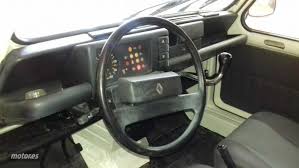
MY FRIEND at work, Ron, was a serious car aficionado, who convinced me to subscribe to Car magazine, which set itself & its readers, lofty heights. Comparatively speaking, that is, seeing as magazines for petrol-heads these days are filled with glorious pictures of unobtainable supercars.
But then, reading this & other mags put me "on the road" for the eternal quest for my ideal car.
I did like the Saab 900 but there were a couple of irritations: even with my seat lowered to its bottom level, because I like to have my backrest fairly vertical, my hair often touched the headlining. And also, on the overrun, the gear lever seemed to rock back & forward again when accelerating. As the engines were mounted back to front in Saabs - with the gearbox in front of the engine, this may have been the cause? Anyway, I was always aware of this, & began to explore the benefits of rear wheel drive cars.
One day, mooching around town while getting the Saab serviced, I came across a seldom-seen-in-Canada car - a Rover 3500.
It was a 1980 model, so I expect the date here was 1983 when coming across the car, in this same gold colour. And...I fell in love! This car had so much going for it! A smallish V8 engine, a hatchback, a sunroof & air-con. Central locking! Power windows! What more could I ask? The price was even bearable, at $6000, which was indicative of heavy depreciation, some 60% from new, but why (I didn't ask)?
So I bought it. My wife was furious, perhaps justifiably as although I'd previously expressed an interest, she seemed not to think me serious, & admittedly, we didn't really need it, as we still had the fairly new Saab 900, but by then I'd borrowed half the money & brought the car home. Now we had 2 cars; one for winter days & a more luxurious one for the rest of the time.
Perhaps that was the excuse she needed for finding a boyfriend & then moving out? I'd tried to appease her, giving her the Saab with a personalised number plate, but the writing was on the wall.
I kept the Rover, and it wasn't long before I began to see why the Rover had suffered such serious depreciation. This was the era of tremendous industrial strife in Britain, with very bolshy unions that Mrs. Thatcher was dealing with, but my car was a product of those unfortunate times. A wonderful car in design, the execution left something to be desired. The panelling on the doors was really just thin mouse fur velour over cardboard, & frequently popped out. The engine sometimes cut out while driving, momentarily, apparently due to Rover's poor choice of Lucas ignition. But apart from that...I loved the car.
Wednesday, 21 February 2018
Adapting To Winter
Where we used to spend holidays & non-work days was 100 miles N of Toronto, on the edge of one large lake & close to another even larger one. The winds blew chill off the icy waters from October to June, & too often carried snow. Once the snow started it usually didn't melt for over 4 months, so a more suitable car for those conditions was needed.
Besides, the little Fiat 128 didn't really fit my increasingly discerning tastes - I read all the car magazines to form those opinions!
A most sensible choice seemed to be a Saab 99. These were fairly new to Canada & rapidly making their mark. After all, few cars had heated seats, demisters for side windows that actually worked & solid, thoughtful construction that went so far as to camber the car doors in at the sills so snow & slush didn't easily transfer to clothing upon entry or exit. A fairly sprightly 1800cc engine (Triumph based) gave a bit under 100 HP controlled by 4 gears. I also liked the quirkiness of the ignition key being by the handbrake instead of in the dashboard like every other car. Ours was the same colour as shown here, except it wasn't the hoity-toity Turbo model that this one is, so also didn't have the flash wheels. Not that I aspired to the Turbo model as these early adoptions of turbochargers meant engine heating problems - you had to run the engine a few seconds after stopping, before switching off, & after all, I wasn't - never have been - much of a speed demon. I bought cars for esoteric reasons. Comfort, style & build quality. Suitability for purpose.
Now, if you're a Canadian reading this, you won't be impressed with pictures of cars half-buried in snow, but to me, a relative newcomer to real winter weather at the time these photos were taken, in the mid-seventies, I was aghast at the severity of blizzards!
So the Saab 99 did us well - that is until the Saab 900 came on the market. I was a bit dismayed at the price - around C$13000 which was a big jump over the previous model; but this was the era when inflation began creeping up.
Our Saab 900 really wasn't very different from its predecessor, now I think back on, just a bit more modern in appearance, with fuel injection, a 2 litre engine pumping the power to over, gasp, 105 HP! With 5 gears, it seemed very peppy to me. And perhaps a trifle more mainstream in appearance from outside, although it maintained the sensibly placed ignition key socket.
It was the same colour as the one below, and had those ugly rubber bumpers required by US safety regulators.
These were know as "5mph" bumpers as they were supposed to resist an impact of less than that speed without damage, but unfortunately, that even was questionable, & the cost of replacing one, with it's built-shock absorbers, exceeded the earlier & prettier chrome ones.
Besides, the little Fiat 128 didn't really fit my increasingly discerning tastes - I read all the car magazines to form those opinions!
A most sensible choice seemed to be a Saab 99. These were fairly new to Canada & rapidly making their mark. After all, few cars had heated seats, demisters for side windows that actually worked & solid, thoughtful construction that went so far as to camber the car doors in at the sills so snow & slush didn't easily transfer to clothing upon entry or exit. A fairly sprightly 1800cc engine (Triumph based) gave a bit under 100 HP controlled by 4 gears. I also liked the quirkiness of the ignition key being by the handbrake instead of in the dashboard like every other car. Ours was the same colour as shown here, except it wasn't the hoity-toity Turbo model that this one is, so also didn't have the flash wheels. Not that I aspired to the Turbo model as these early adoptions of turbochargers meant engine heating problems - you had to run the engine a few seconds after stopping, before switching off, & after all, I wasn't - never have been - much of a speed demon. I bought cars for esoteric reasons. Comfort, style & build quality. Suitability for purpose.
Now, if you're a Canadian reading this, you won't be impressed with pictures of cars half-buried in snow, but to me, a relative newcomer to real winter weather at the time these photos were taken, in the mid-seventies, I was aghast at the severity of blizzards!So the Saab 99 did us well - that is until the Saab 900 came on the market. I was a bit dismayed at the price - around C$13000 which was a big jump over the previous model; but this was the era when inflation began creeping up.
Our Saab 900 really wasn't very different from its predecessor, now I think back on, just a bit more modern in appearance, with fuel injection, a 2 litre engine pumping the power to over, gasp, 105 HP! With 5 gears, it seemed very peppy to me. And perhaps a trifle more mainstream in appearance from outside, although it maintained the sensibly placed ignition key socket.
It was the same colour as the one below, and had those ugly rubber bumpers required by US safety regulators.
These were know as "5mph" bumpers as they were supposed to resist an impact of less than that speed without damage, but unfortunately, that even was questionable, & the cost of replacing one, with it's built-shock absorbers, exceeded the earlier & prettier chrome ones.Tuesday, 20 February 2018
Off To Canada
BUT FIRST there was a short sojourn back in Oz with my dear parents. By this time, the very early 1970s, Dad had progressed to the Volkswagen 1600, which was a radical difference in appearance from the Beetle, really called the Type 1. It was still built on a chassis, with a rear air-cooled engine, but it was a bit bigger & more conventional appearance. Dad's was probably a 1971 or so, & likely fully imported from Germany, although some other body shapes were made in Melbourne, until production ceased, with the remaining cars just being imported as CKD, which means in pieces for reassembly - Complete Knock Down. A new company was formed to do this which also assembled Datsun & Volvos.
The 1600 served them very well, & initially I recalled it as a nice car, but upon a visit when it was some 15 years old, the upholstery had lost its comfortable padding & the car was terribly hot without air-con.
Cars in Australia can last for decades longer than in Canada or northern US states as rust is not a problem in such a dry climate, so on later visits to Melbourne it was interesting to see the same cars still going strong, even if the paint & dashboards faded from prolonged exposure to the hot sun.
Some other family members had memorable cars: a cousin drove - & carefully polished & maintained - a Mayflower, & an uncle owned a lovely Humber Snipe.
But my partner didn't enjoy life in Australia, so after a short return to England, where we lived & worked in Hampshire, we, with a very young son, moved to Toronto, Canada.
With family responsibilities now, a steady job was obtained & we soon bought a house. Houses were quite affordable then, in Toronto, & I observe that our first house, bought for around $50,000, would be worth some 25 times that now, making it, & most other houses in Toronto, too expensive for young families. And so it was then I was able to afford my first NEW car!
Not that the bright yellow Fiat 128 we carefully chose was a luxurious car, but it was well reviewed, back then when car reviews had meaning & were useful & trustworthy - so very different from the superficial rewrites of company blurbs you read nowadays.
Our little car had front wheel drive, just like my earlier Renault & unlike the rear wheel drive VWs I had become used to, & fwd was a significant advantage in snowy Ontario.
We were fortunate enough to be able to spend weekends & holidays in the country, and even more fortunate in that my job also provided a car for business & personal use. We were supposed to keep track of personal miles & not claim them back in our expense accounts, but this was a minor expense, so instead on taking our new Fiat over rough, unpaved gravel roads, through salty slush & often deep snow, we used the company car, a 1973 Ford Torino, which to me, seemed enormous, as did the following Chevrolet Chevelle. Here's photo of me (and her) from that time. I have mixed feelings about these very large American cars. On the one hand they handled terribly - going over bumps while cornering often made the back end hop sideways, and the seats, although wide, were not really comfortable. But there is something appealing about the effortless power of a big, lazy V8 engine, as well as the burbling sound the engine makes.
And then promotion came along, & the significant pay raise was modified by the loss of the car as the job became mostly an indoors one. I didn't really mind having to go to the office every day as I wasn't disciplined enough to work efficiently from home 3 days a week, & public transport in Toronto was both good & cheap, as it still is.
But the Fiat, being a European economy car from a climate far less harsh than Canada's, really wasn't cut out for deep snow as we suffered from in the snowbelt part of Ontario where we spent weekends. Lovely in the summer, but then, 8 months of the year...Brrr!
The 1600 served them very well, & initially I recalled it as a nice car, but upon a visit when it was some 15 years old, the upholstery had lost its comfortable padding & the car was terribly hot without air-con.
Cars in Australia can last for decades longer than in Canada or northern US states as rust is not a problem in such a dry climate, so on later visits to Melbourne it was interesting to see the same cars still going strong, even if the paint & dashboards faded from prolonged exposure to the hot sun.
Some other family members had memorable cars: a cousin drove - & carefully polished & maintained - a Mayflower, & an uncle owned a lovely Humber Snipe.
But my partner didn't enjoy life in Australia, so after a short return to England, where we lived & worked in Hampshire, we, with a very young son, moved to Toronto, Canada.With family responsibilities now, a steady job was obtained & we soon bought a house. Houses were quite affordable then, in Toronto, & I observe that our first house, bought for around $50,000, would be worth some 25 times that now, making it, & most other houses in Toronto, too expensive for young families. And so it was then I was able to afford my first NEW car!
Not that the bright yellow Fiat 128 we carefully chose was a luxurious car, but it was well reviewed, back then when car reviews had meaning & were useful & trustworthy - so very different from the superficial rewrites of company blurbs you read nowadays.
Our little car had front wheel drive, just like my earlier Renault & unlike the rear wheel drive VWs I had become used to, & fwd was a significant advantage in snowy Ontario.
We were fortunate enough to be able to spend weekends & holidays in the country, and even more fortunate in that my job also provided a car for business & personal use. We were supposed to keep track of personal miles & not claim them back in our expense accounts, but this was a minor expense, so instead on taking our new Fiat over rough, unpaved gravel roads, through salty slush & often deep snow, we used the company car, a 1973 Ford Torino, which to me, seemed enormous, as did the following Chevrolet Chevelle. Here's photo of me (and her) from that time. I have mixed feelings about these very large American cars. On the one hand they handled terribly - going over bumps while cornering often made the back end hop sideways, and the seats, although wide, were not really comfortable. But there is something appealing about the effortless power of a big, lazy V8 engine, as well as the burbling sound the engine makes.
But the Fiat, being a European economy car from a climate far less harsh than Canada's, really wasn't cut out for deep snow as we suffered from in the snowbelt part of Ontario where we spent weekends. Lovely in the summer, but then, 8 months of the year...Brrr!
Back To The UK
IN MY EARLY twenties I moved back to England. Sort of ... as I went back & forth several times, as in those days I was able to get an easy job transfer between the AA & the RACV.
In London you don't really need a car but by the time I was living in Walthamstow with my girlfriend Jennifer & her parents, there was much to explore. I don't know how I came upon my 1964 Renault R4, or how much it cost - around£300 I think - but the R4 was probably the first hatchback & thus a precursor of the ubiquitous SUV. Being a french car, designed to compete with the iconic Citroen 2CV, it was pretty basic, with a small engine of less than a litre in size, seats reminiscent of deckchairs & lots of roll (but limpet-like handling) but also had a wonderfully large sunroof. Many manufacturers charge around $2000 for sunroofs these days as an "extra", more's the pity! You can see that the Renault has the 2 box shape so prevalent today. But the interior was rather different as the gear lever protruded from the dashboard. To change gear you pulled & twisted left & right, in more or less the familiar H pattern.
This car was slow to accelerate, but very comfortable & practical, so I was sorry to have to sell it, as I "moved on" in life. I put that term in quotes as possibly inappropriate, but changes were certainly made.
As I said I worked in London for the famous Automobile Association, who were based in Leicester Square, a truly wonderful place to work. As the job involved dealing with cars going in & out of the continent, in those pre-EU days, cars were required to carry Carnets de Passage to enable easy entry into France, in particular, so I was exposed to many international travellers, at at time when travel was not as cheap as it later became. Several were planning to go "overland" to Katmandu, perhaps inspired by The Beatles venture into eastern music for a while. George Harrison's Within You, Without You is the best example.
So I wanted a car that could go anywhere - just in case my new lady friend & I decided to take off for Asia. It had to be something strong & 4 wheel drive, we thought, but the obvious choice, Land Rovers, were out of our price range. Still, as the Second World War was only 25 years in the past, an ex-military vehicle appealed, built as they were supposed to be, to last!
Ours looked just like this restored one, without the snorkel or shovel, but we were able to utilise the gun racks for umbrellas. Unusually, the Champ had the ability to reverse the transmission, so that with a lever, you could go through all 4 gears in reverse! We used to joke that this must have been very useful during the Dunkirk evacuation! We took that car for a lovely summer sojourn in Andorra, camping out in a farmer's field by the edge of a lovely stream, & fell asleep each night to the sound of that bubbling brook mixed with the dinging of the cowbells around the necks of the farmer's Charolais cattle.
In London you don't really need a car but by the time I was living in Walthamstow with my girlfriend Jennifer & her parents, there was much to explore. I don't know how I came upon my 1964 Renault R4, or how much it cost - around£300 I think - but the R4 was probably the first hatchback & thus a precursor of the ubiquitous SUV. Being a french car, designed to compete with the iconic Citroen 2CV, it was pretty basic, with a small engine of less than a litre in size, seats reminiscent of deckchairs & lots of roll (but limpet-like handling) but also had a wonderfully large sunroof. Many manufacturers charge around $2000 for sunroofs these days as an "extra", more's the pity! You can see that the Renault has the 2 box shape so prevalent today. But the interior was rather different as the gear lever protruded from the dashboard. To change gear you pulled & twisted left & right, in more or less the familiar H pattern.This car was slow to accelerate, but very comfortable & practical, so I was sorry to have to sell it, as I "moved on" in life. I put that term in quotes as possibly inappropriate, but changes were certainly made.
As I said I worked in London for the famous Automobile Association, who were based in Leicester Square, a truly wonderful place to work. As the job involved dealing with cars going in & out of the continent, in those pre-EU days, cars were required to carry Carnets de Passage to enable easy entry into France, in particular, so I was exposed to many international travellers, at at time when travel was not as cheap as it later became. Several were planning to go "overland" to Katmandu, perhaps inspired by The Beatles venture into eastern music for a while. George Harrison's Within You, Without You is the best example.
So I wanted a car that could go anywhere - just in case my new lady friend & I decided to take off for Asia. It had to be something strong & 4 wheel drive, we thought, but the obvious choice, Land Rovers, were out of our price range. Still, as the Second World War was only 25 years in the past, an ex-military vehicle appealed, built as they were supposed to be, to last!
Ours looked just like this restored one, without the snorkel or shovel, but we were able to utilise the gun racks for umbrellas. Unusually, the Champ had the ability to reverse the transmission, so that with a lever, you could go through all 4 gears in reverse! We used to joke that this must have been very useful during the Dunkirk evacuation! We took that car for a lovely summer sojourn in Andorra, camping out in a farmer's field by the edge of a lovely stream, & fell asleep each night to the sound of that bubbling brook mixed with the dinging of the cowbells around the necks of the farmer's Charolais cattle.
Other Interesting Cars From My Aussie Days
WHEN I was a teenager our family lived mostly in Australia, which meant that by the 1960s there was a good mix of British & American cars to choose from.Of course, the most popular models were Holden & Falcon, home grown for the most part, taking styling ideas from their parent company in Detroit. An early Holden is a visible prop in the TV series A Place To Call Home, which is set just outside Sydney in the Fifties. As you can see, it looked very much like big brother Chevrolets.
Falcons had a more modern appearance by the time they came onto the market about 10 years after the Holden, and progressed from the ponton look of Holden into a more integrated shape, thereby doing away with the engine bulge, fender shapes & curved trunk into a 3 box design that would last for many decades until the rise of the CUV of today.
The evolution of car shapes is a very interesting one, beginning as they did from a horseless carriage with a motor, to the powerful, safe & quite efficient car of today.
The trunk was literally that in early days - a luggage receptacle strapped to the back of the car in the US, but the British term "boot" predates "trunk", going back to the 18th century where footmen of wealthy households did double duty as coachmen, and, due to the undeveloped nature of roads those days, need boots for the coach. These were stored in the "boot locker" attached to rear of the coach. Gradually, the "locker" bit was dropped to become just "boot" as is used today.
To my mind there is something very attractive about the shape of cars before, say 1955, when cars in North America underwent a dramatic change in appearance - they were usually very outdated underneath, with cart springs, pre-war engines & poor brakes. And perhaps they needed refined chassis far less that European cars, because that was the time when the wonderfully useful Interstate system of wide, divided, gently curving freeways was put in place. So a big, clumsy car with a floaty ride was popular...for a while until Ralph Nader exposed GM shortcuts in his famous book Unsafe At Any Speed which was an attack upon Chevrolet's attempt at a smaller car - the somewhat Volkswagen mimicking (by having a rear air-cooled engine) Corvair.
Falcons had a more modern appearance by the time they came onto the market about 10 years after the Holden, and progressed from the ponton look of Holden into a more integrated shape, thereby doing away with the engine bulge, fender shapes & curved trunk into a 3 box design that would last for many decades until the rise of the CUV of today.
The evolution of car shapes is a very interesting one, beginning as they did from a horseless carriage with a motor, to the powerful, safe & quite efficient car of today.
The trunk was literally that in early days - a luggage receptacle strapped to the back of the car in the US, but the British term "boot" predates "trunk", going back to the 18th century where footmen of wealthy households did double duty as coachmen, and, due to the undeveloped nature of roads those days, need boots for the coach. These were stored in the "boot locker" attached to rear of the coach. Gradually, the "locker" bit was dropped to become just "boot" as is used today.To my mind there is something very attractive about the shape of cars before, say 1955, when cars in North America underwent a dramatic change in appearance - they were usually very outdated underneath, with cart springs, pre-war engines & poor brakes. And perhaps they needed refined chassis far less that European cars, because that was the time when the wonderfully useful Interstate system of wide, divided, gently curving freeways was put in place. So a big, clumsy car with a floaty ride was popular...for a while until Ralph Nader exposed GM shortcuts in his famous book Unsafe At Any Speed which was an attack upon Chevrolet's attempt at a smaller car - the somewhat Volkswagen mimicking (by having a rear air-cooled engine) Corvair.
Monday, 19 February 2018
The Volkswagen Era
It wasn't long, however, before my cousin, still in his twenties, discovered he had a knack for sales as well as an interest in cars.Soon, he combined the two by deciding to buy & then sell, used Volkswagens. And of course, as he trolled the market, suitable cars for the whole family became available. We, Dad, me & others, soon all drove VWs. They weren't called Beetles, in those days of course, as there was only one model, starting from before the war. At the time I became a VW driver, the engine was an air-cooled one of 1200 cc developing, gasp, 36 HP! (In comparison, my current car has way too much engine power at 325 HP)
My first Volksie was a 1956 with the small back window like this one below - I think the original pre-war cars had a tiny, divided rear window so mine was a step up!
But of course, after a while there were further refinements to the car - the engine power went up to 40 HP, turn signals were incorporated into the mudguards, replacing the lit-up semaphores in both my car & Dad's earlier A30.
Dad got a green one to replace the Austin, & later another with fancy, chrome override bumpers!
One of the reasons we drove Volkswagens was that, in many ways, they were an improvement upon the alternatives, being mostly outdated Morris Minors or Fords. VWs were well made, virtually indestructible & very economical with fuel. But one funny quirk was that in the interest of economy, my car didn't have a fuel gauge! Instead, it had a little lever tucked away in the footwell above the pedal which switched the basic fuel tank over to the emergency tank, giving you about another 30 miles of driving. What you were supposed to do was drive until the engine spluttered, kick the lever over to horizontal, fill up as soon as possible & kick the lever back into its vertical position. It was all very easy to do, but very hard for me to remember, so what happened far too often was driving until the engine coughed, trying to switch over & then discovering that you were ALREADY drawing petrol from the emergency tank, & thus stuck!
My first Volksie was a 1956 with the small back window like this one below - I think the original pre-war cars had a tiny, divided rear window so mine was a step up!
But of course, after a while there were further refinements to the car - the engine power went up to 40 HP, turn signals were incorporated into the mudguards, replacing the lit-up semaphores in both my car & Dad's earlier A30.
Dad got a green one to replace the Austin, & later another with fancy, chrome override bumpers!
One of the reasons we drove Volkswagens was that, in many ways, they were an improvement upon the alternatives, being mostly outdated Morris Minors or Fords. VWs were well made, virtually indestructible & very economical with fuel. But one funny quirk was that in the interest of economy, my car didn't have a fuel gauge! Instead, it had a little lever tucked away in the footwell above the pedal which switched the basic fuel tank over to the emergency tank, giving you about another 30 miles of driving. What you were supposed to do was drive until the engine spluttered, kick the lever over to horizontal, fill up as soon as possible & kick the lever back into its vertical position. It was all very easy to do, but very hard for me to remember, so what happened far too often was driving until the engine coughed, trying to switch over & then discovering that you were ALREADY drawing petrol from the emergency tank, & thus stuck!
MY First Car
But the A30 was my Dad's & wisely perhaps, I didn't get to drive it. However before we left Perth I learnt to drive on a 1948 Buick that was supplied to my salesman cousin in his job.
He taught me about the pedals & gearchanges - how to double declutch & to release the brake at the very last moment when stopping, so that the car doesn't jerk to a stop. Most people haven't mastered those skills, I observe, by the way. I also was taught to use the manual choke to move the car a bit before managing to balance the clutch with the throttle. I expect the Buick looked something like this old Chevrolet. It was a very simple & easy car to drive, with just 2 or perhaps 3 forward gears, mounted, as they say, "on the tree".
Later on, when I could afford it, I was able to purchase my own car, a Ford Consul. Used, of course but still in reasonable shape. I think it was a 1956, with 2 tone paint. The Consul was the cheaper of the mid-sized Fords, the better & more well-equipped model being the Zephyr, but fundamentally they were the same car. But the Consul had less chrome, no heater nor, gulp, the ultimate luxury for the day, windscreen washers to enable one to clear the screen without having to stop, get out, find the rag, rub away, pour a little water from the bottle you carried onto the viewing area, rubbing again before hopping back in - only to usually find that streaks had been left, so it was either out again to finish the job, or restart the engine, because, of course, the wipers were not electric but needed the engine running to provide the vacuum. One other drawback of that system was that just when you needed the wipers most, say at speed in heavy rain, the wipers wove back & forth very slowly, depending on throttle position. But once you backed off the gas, they beat away like crazy, making a puff with every stroke! I think my Consul looked just like this, except being green where red is shown here.
By the way, after so many decades of cars mostly having just one colour, I think I perceive a trend back towards 2 tone cars, but time will tell.
The Consul was quite a roomy car, especially after the cramped Austin. But even though Melbourne doesn't ever have below freezing temperatures, it can get pretty close, & the lack of heat meant that I'd often have to drive with a blanket around my knees!
He taught me about the pedals & gearchanges - how to double declutch & to release the brake at the very last moment when stopping, so that the car doesn't jerk to a stop. Most people haven't mastered those skills, I observe, by the way. I also was taught to use the manual choke to move the car a bit before managing to balance the clutch with the throttle. I expect the Buick looked something like this old Chevrolet. It was a very simple & easy car to drive, with just 2 or perhaps 3 forward gears, mounted, as they say, "on the tree".
Later on, when I could afford it, I was able to purchase my own car, a Ford Consul. Used, of course but still in reasonable shape. I think it was a 1956, with 2 tone paint. The Consul was the cheaper of the mid-sized Fords, the better & more well-equipped model being the Zephyr, but fundamentally they were the same car. But the Consul had less chrome, no heater nor, gulp, the ultimate luxury for the day, windscreen washers to enable one to clear the screen without having to stop, get out, find the rag, rub away, pour a little water from the bottle you carried onto the viewing area, rubbing again before hopping back in - only to usually find that streaks had been left, so it was either out again to finish the job, or restart the engine, because, of course, the wipers were not electric but needed the engine running to provide the vacuum. One other drawback of that system was that just when you needed the wipers most, say at speed in heavy rain, the wipers wove back & forth very slowly, depending on throttle position. But once you backed off the gas, they beat away like crazy, making a puff with every stroke! I think my Consul looked just like this, except being green where red is shown here.
By the way, after so many decades of cars mostly having just one colour, I think I perceive a trend back towards 2 tone cars, but time will tell.
The Consul was quite a roomy car, especially after the cramped Austin. But even though Melbourne doesn't ever have below freezing temperatures, it can get pretty close, & the lack of heat meant that I'd often have to drive with a blanket around my knees!
Subscribe to:
Posts (Atom)